
Understanding Difficult Behaviour in Outdoor Settings: A Guide for Parents and Educators


Every child has difficult moments outdoors. A five-year-old who refuses to join the group. A seven-year-old who throws a stick in frustration. A ten-year-old who shuts down completely when asked to try something new. These moments can be stressful for parents and challenging for educators, but they are also some of the most important learning opportunities Forest School has to offer.
At Wildlings, we do not see difficult behaviour as something to eliminate. We see it as communication. The child is telling us something about their needs, their emotional state, or the gap between what is being asked of them and what they feel able to do. Our job, as educators and as parents, is to listen to what the behaviour is saying and respond to the need underneath it.
This article is written for both audiences. If you are a parent, it will help you understand how we approach behaviour at Forest School and give you strategies to use at home. If you are an educator or outdoor practitioner, it offers a framework grounded in research that you can apply in your own practice.
The Event, the Response, and the Outcome

There is a simple but powerful framework at the heart of how we approach behaviour: every situation involves an event, a response, and an outcome. You cannot always control the event. A child falls over, a plan changes, it rains, a peer says something unkind. What you can control is the response, and the response is what shapes the outcome.
This is closely aligned with Albert Ellis's ABC model from cognitive behavioural psychology: the Activating event triggers Beliefs, which drive Consequences (emotional and behavioural). Ellis showed that it is not the event itself that causes the reaction, but our interpretation of it. A child who believes that falling over means they are useless will react very differently from a child who believes that falling over is a normal part of trying something hard.
For both parents and educators, this reframe is essential. When a child is behaving in ways that are difficult, the question is not "how do I stop this behaviour?" but rather "what is this child believing right now, and how can I help them see it differently?"
Self-Regulation Is a Skill, Not an Expectation
One of the most important insights from developmental psychology is that self-regulation is not something children are born with. It is a skill that develops over time, with practice, and with the support of attuned adults.
Dr Stuart Shanker's Self-Reg framework distinguishes between self-regulation and self-control. Self-control is about suppressing impulses through willpower. Self-regulation is about understanding and managing the energy and tension that drive those impulses in the first place. A child who is overwhelmed, overstimulated, hungry, anxious, or exhausted is not choosing to misbehave. Their stress response system is activated and their capacity for rational decision-making is reduced.

This matters enormously in outdoor settings. The sensory environment at Forest School is rich: sounds, textures, temperatures, open space, physical challenge. For most children, this is regulating. The natural world helps them calm down, focus, and feel grounded. But for some children, particularly those who are already stressed or who have sensory processing differences, the outdoor environment can initially feel overwhelming. Recognising this is the first step to supporting them effectively.
What Drives Difficult Behaviour Outdoors?
In our experience, most difficult behaviour at Forest School falls into a few categories, and none of them are about a child being "naughty".
Fear and anxiety. A child who has limited outdoor experience may be genuinely frightened by things that seem unremarkable to us: insects, mud, uneven ground, heights, or the absence of walls and boundaries. This fear is real and valid. Dismissing it or forcing a child to push through it rarely works and often makes things worse.
Frustration with challenge. Forest School deliberately offers age-appropriate challenge. When a child cannot tie a knot, build a structure that stays up, or climb a tree they want to climb, frustration is inevitable. The question is whether they have the emotional tools to work through it. Many children, especially those accustomed to adult-directed activities where success is guaranteed, have not had enough practice at failing.
Social conflict. Group dynamics are a core part of Forest School. Sharing resources, negotiating roles, dealing with disagreement. These are essential life skills, but they are hard. For children who are used to playing alone or having adult-mediated interactions, the unstructured social environment of Forest School can trigger conflict.
Unmet sensory or physical needs. A child who is too hot, thirsty, tired, or overstimulated will find it difficult to engage. This is not bad behaviour. It is the body communicating a basic unmet need. Before addressing behaviour, always check the basics.

How We Respond at Wildlings
Our approach to behaviour is built on a few consistent principles. First, we stay calm. A dysregulated adult cannot regulate a dysregulated child. This sounds obvious but is remarkably hard in practice. If a child is shouting, throwing things, or refusing to cooperate, the most powerful thing an adult can do is lower their own voice, slow their own breathing, and be the calm in the situation.
Second, we connect before we correct. Before addressing the behaviour, we acknowledge the feeling. "I can see you're really frustrated right now." "That looks like it was scary." "It's okay to feel angry." Dr Dan Siegel's research on interpersonal neurobiology shows that when a child feels seen and understood, their stress response begins to reduce, and they become more able to think, reason, and problem-solve.
Third, we look for the need behind the behaviour. A child who hits may be overwhelmed. A child who refuses to participate may be afraid. A child who disrupts may need more challenge, not less. Once we identify the need, we can address it directly rather than simply managing the surface behaviour.
Fourth, we use natural consequences. If a child throws a tool, the tool is taken away. Not as punishment, but because it is not safe. If a child refuses to wear a hat in the sun, they may need to sit in the shade. Natural consequences teach cause and effect more powerfully than imposed punishment ever can.

What Parents Can Do at Home
The same principles work at home, in the park, on holiday, anywhere.
Regulate yourself first.
Name the emotion, not the behaviour.
Look for the unmet need.
Use natural consequences where possible.
And above all, remember that difficult behaviour is developmental, not deliberate. Children are not giving you a hard time. They are having a hard time.
Build outdoor time into your routine. Nature is inherently regulating for most children. The sensory richness of the outdoor environment, combined with the physical movement and freedom it allows, helps children discharge stress and return to a regulated state. If your child has had a difficult day, going outside is often more effective than talking about it.
Give your child real responsibility and real challenge. Much of what we label as difficult behaviour in older children, particularly in the seven to twelve age range, comes from boredom, under-challenge, or a lack of autonomy. A child who is trusted to build a fire, navigate a trail, or manage a genuine task is far less likely to act out than one who is constantly supervised and directed.
It Gets Easier with Practice

Self-regulation, resilience, and the ability to manage frustration are all skills. Like any skill, they improve with practice in a supportive environment. That is exactly what Forest School provides: repeated exposure to challenge, natural consequences, and the space to develop emotional competence over time.
Children who attend Forest School regularly tend to develop stronger self-regulation, better social skills, and greater emotional resilience. This is not because we avoid difficult moments. It is because we create the conditions for children to work through them, with the right support, at their own pace.
If your child is struggling with behaviour, outdoors or at home, you are not alone and there is nothing wrong with your child. They are learning. And the outdoor environment, with its space, its sensory richness, and its natural consequences, is one of the best classrooms for that learning to happen.
References
1. Ellis, A. (1991). "The Revised ABC's of Rational-Emotive Therapy (RET)." Journal of Rational-Emotive and Cognitive-Behavior Therapy, 9(3), 139-172.
2. Shanker, S. (2016). Self-Reg: How to Help Your Child (and You) Break the Stress Cycle and Successfully Engage with Life. Penguin.
3. Siegel, D.J. and Bryson, T.P. (2012). The Whole-Brain Child: 12 Revolutionary Strategies to Nurture Your Child's Developing Mind. Bantam.
4. Brussoni, M. et al. (2012). "Risky Play and Children's Safety: Balancing Priorities for Optimal Child Development." International Journal of Environmental Research and Public Health, 9(9), 3134-3148.
5. McCree, M., Cutting, R. and Sherwin, D. (2018). "The Hare and the Tortoise Go to Forest School." Early Child Development and Care, 188(7), 980-996.
About Claire
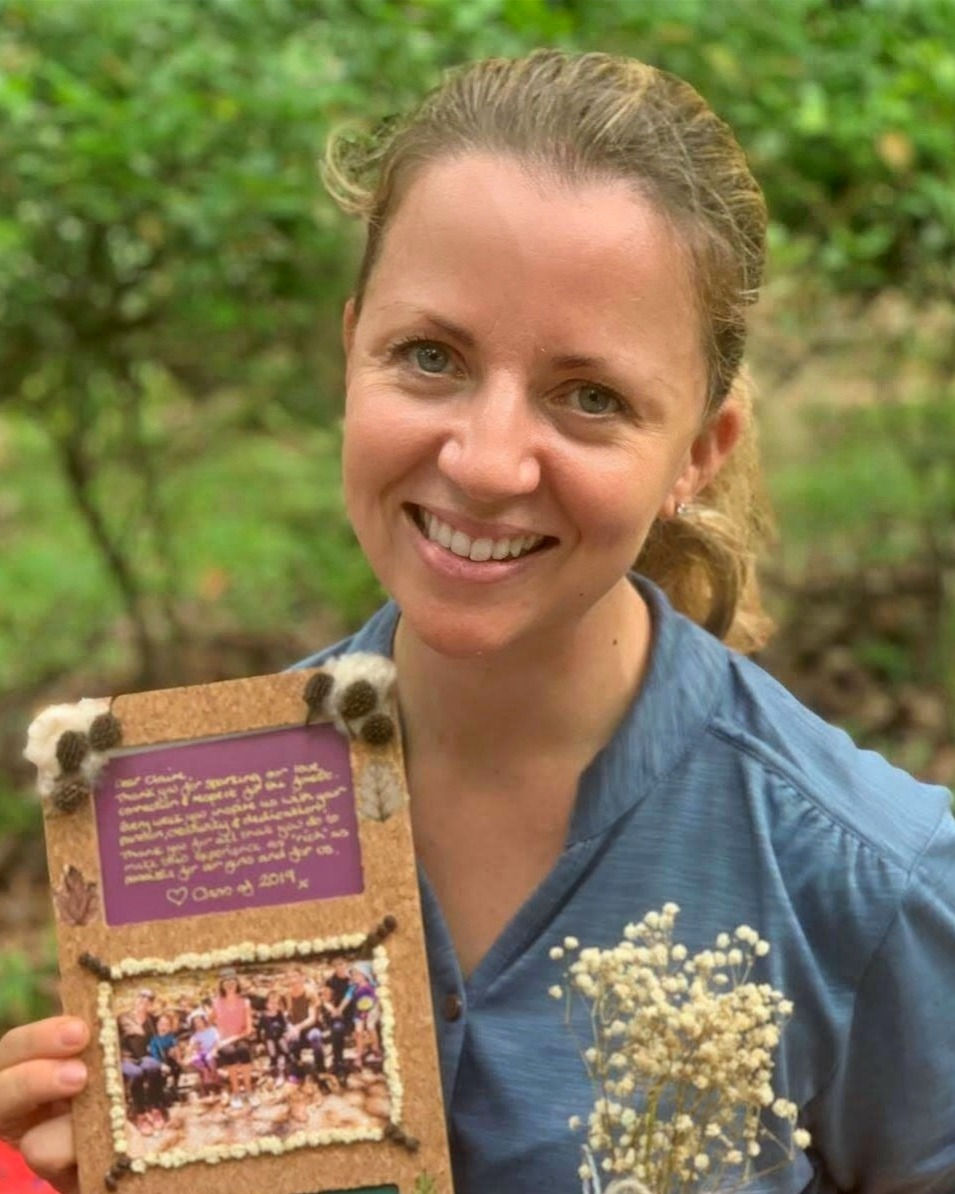
Claire is the Founder and CEO of Wildlings, an environmental scientist by training and an environmental sustainability consultant and educator by trade. Claire is on a mission to help city kids experience a wilder childhood through the Forest School approach to learning and founded Wildlings in 2019 offering outdoor activities for children and families in Singapore.


Comments